Guide four
Choosing a spa hotel: the questions that actually separate them
"Spa hotel" covers a Bohemian sanatorium, an Austrian sauna village, a Breton seawater clinic and a city hotel with a basement pool. The label tells you almost nothing. These are the distinctions that do.
First: what kind of spa is it?
Most European spa hotels fall into one of five loose types, and the type predicts the experience better than the star rating does. A thermal hotel sits on or beside a natural spring and its pools are fed by it. A medical or cure hotel, common in Central Europe, offers physician-led programmes and expects stays of a week or more. A destination wellness hotel, the Alpine model, makes the spa the reason for the trip and builds the day around it. A resort spa attaches a large spa to a hotel whose main draw is something else — beach, golf, skiing. And an urban hotel spa offers a pool and treatments as amenities within a city stay. The categories blur at the edges, but asking which one a hotel belongs to is the fastest way to set expectations.
Second: where does the water come from?
We return to this on every page because it matters more than anything else and is disclosed least often. Spring-fed thermal water, drawn seawater and heated mains water can look identical in a photograph. Only the first two give a hotel something you cannot get at home. A hotel that is proud of its source will describe it — the spring, the temperature range in general terms, the minerals — and a hotel that is vague usually has nothing to describe. The thermal towns guide and the coastal guide cover the two genuine sources in detail.
Third: what does the spa actually contain?
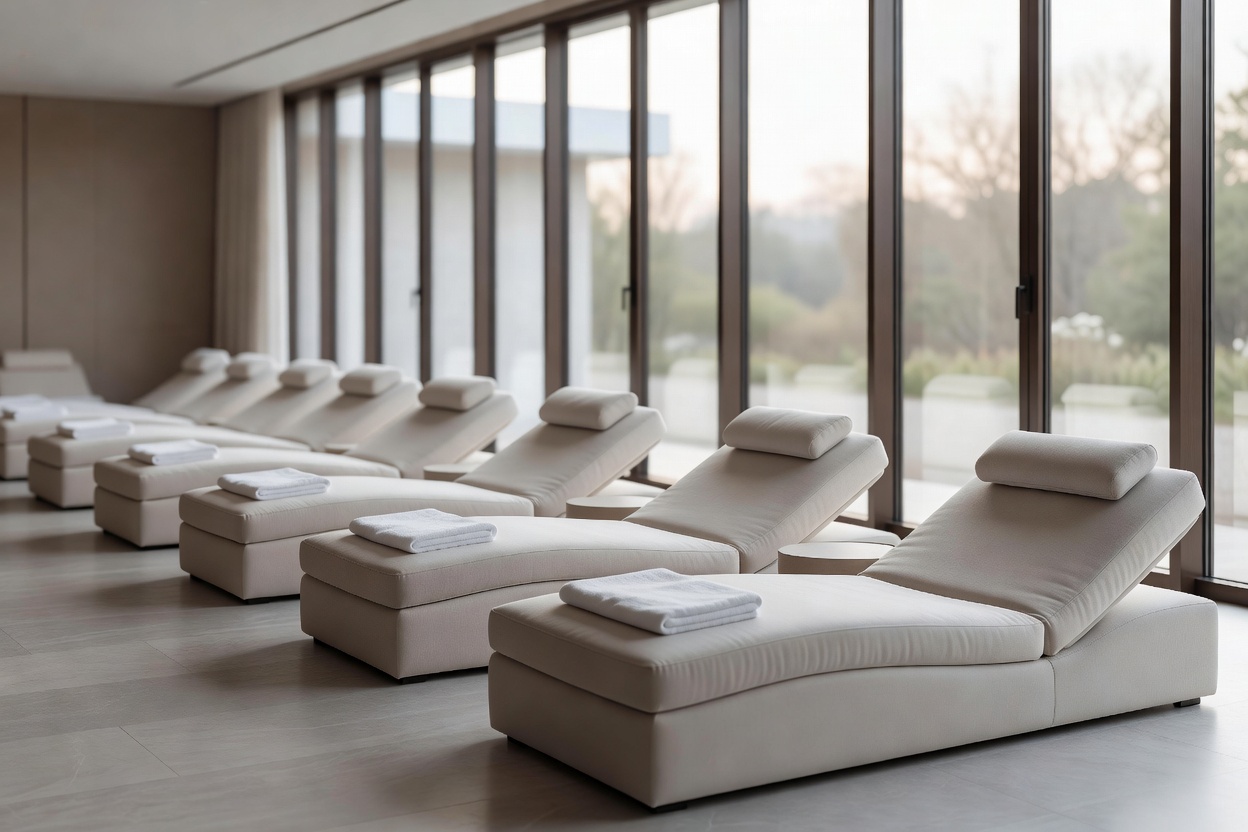
Facilities lists are long and unhelpful, so it is worth knowing which items change the experience. A sauna village or sauna world — several heat rooms at different temperatures and humidities, typically a hot dry Finnish sauna, a milder bio sauna, a steam room and sometimes an infrared cabin — is the mark of a serious Central European spa. A hydrotherapy circuit is a sequence of pools and showers at contrasting temperatures, sometimes with jets; the Roman-Irish bath in Baden-Baden is the historic form. A hammam is a heated marble room in the Ottoman tradition, common in Budapest and increasingly elsewhere. Relaxation rooms, quiet rooms with loungers and often a view, are where the time between heat sessions is actually spent, and their quality is a good indicator of how well the hotel understands its own spa. A single pool and a treatment room can be perfectly pleasant, but it is not the same thing, and the price should reflect that.
Fourth: what is included?
Inclusions vary by country and by type in ways that make headline rates hard to compare. In Austria, South Tyrol and Bavaria, half board is standard and often includes an afternoon buffet, and use of the entire spa is part of the room rate. In many British and Mediterranean hotels, the pool and gym are included but sauna areas may be restricted, treatments are extra and there may be a charge for the thermal circuit even for residents. In thermal towns, the crucial inclusion is access to the public baths, which some hotels bundle and others leave to you. A rate that looks higher may be considerably cheaper once meals and spa access are counted; a rate that looks low may exclude the very things you came for.
Fifth: who is the hotel for?
Two questions decide whether a technically excellent hotel is right for a given trip. Is it adults-only or family-oriented? Alpine wellness hotels increasingly declare one or the other, and a quiet-focused adult hotel and a family hotel with a slide pool are different products under the same word. And is it large or small? Large hotels have more facilities and more scheduling — Aufguss timetables, treatment slots, dinner sittings — while small hotels have fewer facilities but far more freedom and quiet. There is no right answer, only a fit or a mismatch.
Type against expectation
| Type | Water | Typical stay | Suits |
|---|---|---|---|
| Thermal hotel | Natural spring | Short to mid | Bathing as the main pleasure |
| Medical or cure hotel | Often spring or mud | Long | Supervised programmes, with a doctor's advice |
| Destination wellness | Usually heated mains | Mid | Total immersion, half board, mountain views |
| Resort spa | Mains or seawater | Any | Spa alongside beach, golf or skiing |
| Urban hotel spa | Mains | Short | A pool and a treatment within a city break |
Questions that sound important but usually are not
Brand of skincare used in treatments: it changes the smell of the room and little else. Number of treatment rooms: irrelevant unless the hotel is fully booked, in which case what matters is whether you can get a slot, and that is a question to ask directly. Awards: spa awards are numerous, commercially entangled and inconsistent, and we do not use them as a criterion. Photographs of empty pools at dawn: every spa hotel has one, and none of them looks like that at four in the afternoon.
Where we are genuinely unsure
The value of treatments is the hardest call. A good massage after a day in the mountains is a real pleasure; a package of six treatments over three days can leave less time for the pools, saunas and walks that were the reason to travel. Our instinct is to book one or two and decide the rest on arrival, but the cost of that approach is occasionally finding the diary full. And on medical programmes, we simply defer: a cure hotel's prospectus is not medical advice, and neither is this page. Discuss any health-motivated spa stay with a doctor before you commit.