Guide two
Nordic and Alpine wellness: heat, cold and altitude
Grouping Finland with the Tyrol looks odd until you notice what they share: a belief that the spa is a way of life rather than an add-on to a hotel. Where they part company is on almost every practical detail, and those details decide which is right for you.
The Nordic model: sauna as the main event
Finnish sauna culture is inscribed on UNESCO's list of intangible cultural heritage, and the listing captures something important: in Finland the sauna is not a facility, it is a social institution. A Finnish hotel of any standing has one, often several, and the good ones treat it with the seriousness other countries reserve for restaurants. The vocabulary is worth learning. Löyly is the steam released when water hits the stones; a vihta or vasta is a whisk of birch branches used on the skin; avanto is a hole cut in lake ice for the cold plunge that follows. A traditional savusauna, or smoke sauna, is heated by wood fire for hours and then ventilated before use, and has a soft, earthy heat that electric saunas do not match.
The trade-off for the visitor is that Nordic spa hotels are often minimal by Alpine standards. The offer is sauna, cold water, a lake or the sea, a simple pool and perhaps a massage, in a setting of extraordinary quiet. If you want a treatment menu the length of a novel, this is the wrong tradition. If you want the most authentic heat-and-cold ritual in Europe, it is the right one.
Iceland: geothermal bathing at scale
Iceland's spa culture rests on a different resource. The island sits on a volcanic rift and hot water is abundant enough to heat homes, which makes the outdoor geothermal pool an everyday amenity rather than a luxury. Every town has a public pool with hot tubs, and visitors are expected to follow the strict local habit of washing thoroughly without swimwear before entering. The large lagoons — the best known sits on the Reykjanes peninsula and uses mineral-rich water from a neighbouring geothermal plant, and there are others near Lake Mývatn in the north and on the edge of Reykjavík — are destinations in their own right, and hotels near them sell proximity as much as facilities.
Whether an Icelandic lagoon counts as a spa hotel experience is arguable. Most are day venues with hotels attached or nearby rather than hotels with lagoons attached, and the crowds at peak hours are considerable. The case for Iceland is landscape and the sheer strangeness of bathing outdoors in warm water under a cold sky; the case against is cost and the difficulty of finding privacy.
The Alpine model: the wellness hotel
Austria, South Tyrol, Bavaria and Switzerland developed something the Nordic countries did not: the hotel where the spa is the reason for the stay. The German word Wellnesshotel is applied loosely, but at its best it means a family-run property with extensive pools, a sauna village of several heat rooms at different temperatures, relaxation rooms with mountain views, a treatment programme and generous board arrangements. Half board is normal and frequently elaborate; the term Verwöhnpension, roughly "indulgence board", is used for arrangements that include afternoon buffets and multi-course dinners.
Several features distinguish these hotels from spa hotels elsewhere. Sauna areas are usually textile-free and often mixed, which is covered in more detail in the etiquette guide. The Aufguss is a scheduled ritual in which an attendant pours scented water on the stones and circulates the heat with a towel; regulars plan their afternoon around the timetable. And the setting matters enormously: a pool that looks out over the Dolomites or the Ötztal glaciers is doing work that no amount of interior design can replicate at sea level.
Switzerland adds a thermal dimension the rest of the Alps mostly lacks. Bad Ragaz draws water from the Tamina Gorge, Leukerbad in the Valais is built around hot springs, Scuol in the Engadin has a mineral bath complex, and the stone thermal baths at Vals, designed by Peter Zumthor, are a pilgrimage site for architecture as much as for bathing. In South Tyrol, the thermal baths at Merano anchor a town that has been a health resort since the Habsburg period.
Same words, different meanings
| Feature | Nordic | Alpine |
|---|---|---|
| Centre of the experience | Sauna and cold water | Pool, sauna village, treatments, meals |
| Typical hotel scale | Small, plain, close to nature | Mid-size to large, richly appointed |
| Dress in sauna | Usually none, often single-sex | Usually none, often mixed |
| Food | Separate, often simple | Half board or more, central to the stay |
| Best paired with | Lake, forest, aurora, wilderness | Skiing, hiking, mountain scenery |
Where the judgement is uncertain
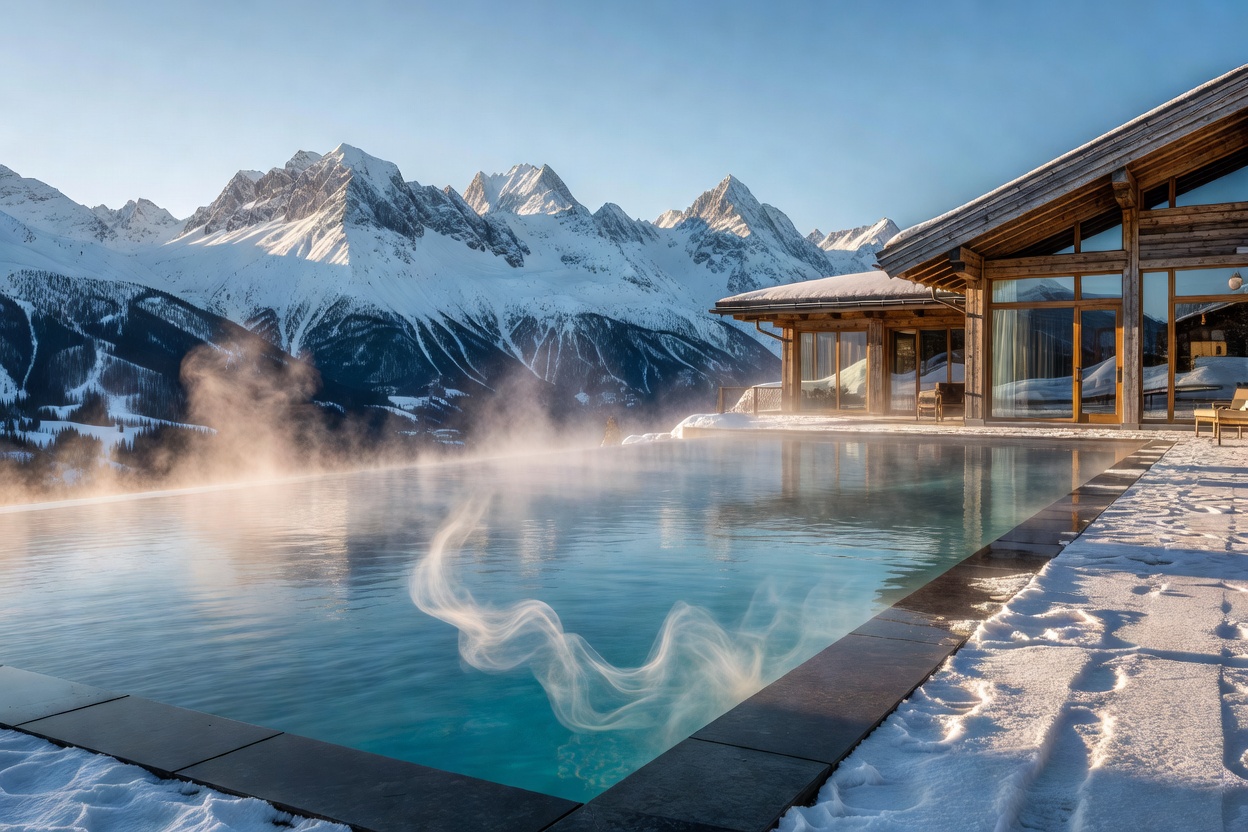
Two questions come up repeatedly and neither has a clean answer. The first is whether Alpine wellness hotels are better in winter or summer; the winter case rests on skiing and the drama of steam against snow, the summer case on hiking, long evenings and lower demand in many valleys, and reasonable people land on either side. The second is whether the extensive treatment menus of the Alpine hotels add value or merely add cost. Our view is that the pools, saunas and views justify the stay on their own, and that treatments should be chosen sparingly rather than in packages — but that is a preference, not a finding.
What is not uncertain is the contrast principle itself. Both traditions alternate heat with cold and rest, and both have refined that sequence over generations. Anyone with a heart or circulatory condition should ask a doctor before taking on cold plunges or prolonged heat; the hotels will not do that checking for you.