Guide three
Coastal spas and thalassotherapy: the sea as the treatment
Seaside spa hotels make a specific claim — that seawater, seaweed and marine climate do something a heated pool inland cannot. The tradition is long and the settings are often superb. The evidence is thinner than the brochures suggest, and it is fair to say so before weighing the rest.
What thalassotherapy means
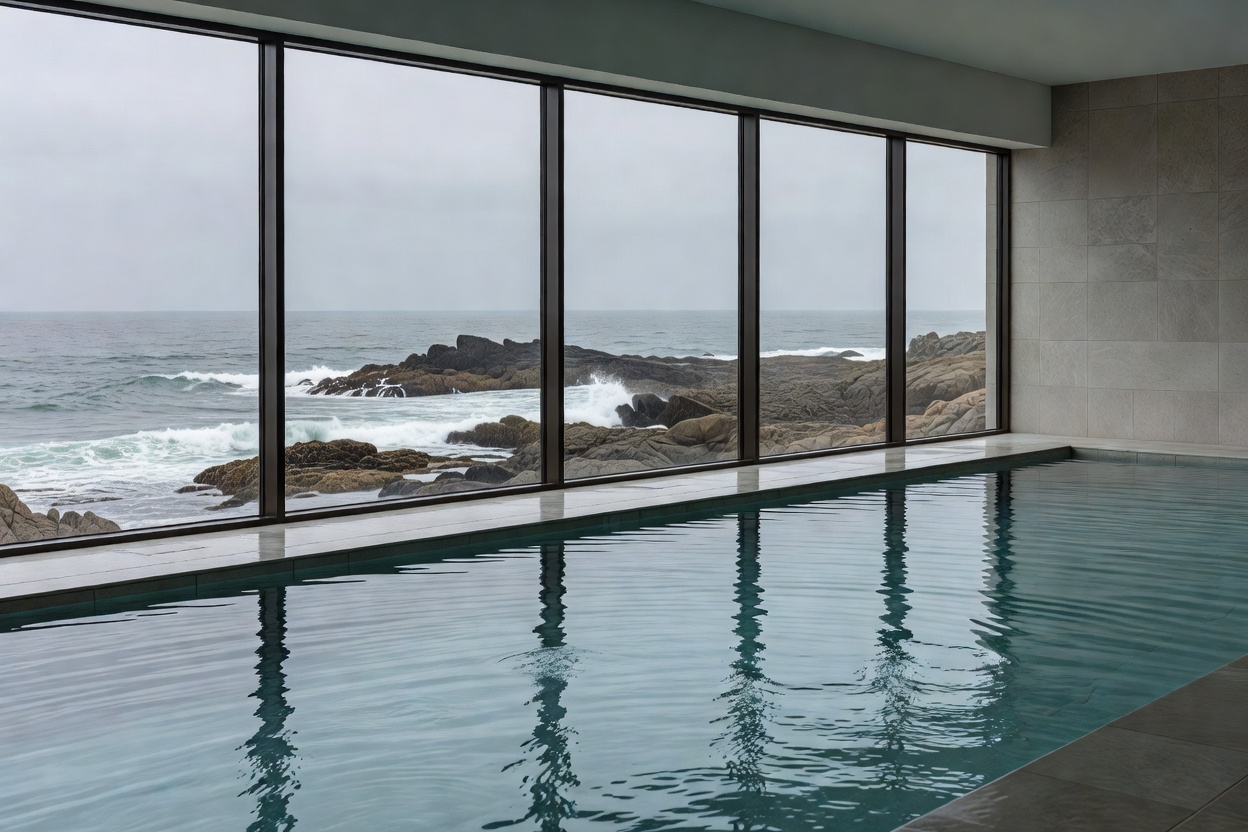
Thalassotherapy combines the Greek words for sea and healing, and the term was coined in France in the nineteenth century. In practice it describes a set of treatments using heated seawater, marine mud and seaweed, together with exposure to sea air. A proper thalassotherapy centre draws seawater directly from the shore, filters and warms it, and uses it in pools, jet baths and showers rather than substituting salted tap water. That distinction — real seawater or not — is the coastal equivalent of the thermal towns' question about spring water, and it is the first thing to establish about any hotel calling itself a thalasso resort.
It is worth separating three overlapping things: the clinical tradition of supervised marine cures, which survives mainly in France; the spa hotel that happens to be on a coast and offers ordinary treatments with a view; and the much older habit of simply going to the sea for one's health, which built resort towns from Brighton to the Baltic. All three are legitimate reasons to book a coastal spa hotel, but they suit different people.
The French Atlantic coast
Brittany is where the modern tradition began and where it remains most concentrated. Roscoff on the north coast, the Quiberon peninsula in the south and the walled city of Saint-Malo all have long-established seawater treatment centres attached to hotels, and the format is consistent: a course of half-day treatment sessions over several days, with the rest of the time free for the beaches and the food. Further south, Biarritz on the Basque coast pairs its thalassotherapy hotels with a surf town's energy, which is a very different mood from Brittany's granite and drizzle. The Breton climate is a trade-off in itself: bracing and dramatic, but not what most people mean by a beach holiday.
Portugal, Spain and the Mediterranean
The Iberian Atlantic offers warmer versions of the same idea. The coast around Cascais and Estoril near Lisbon has a resort pedigree dating back to the nineteenth century, and the Algarve's cliff-top hotels frequently include seawater pools and marine treatments alongside golf. In Spain, the Costa del Sol and the Canary Islands sell climate first and spa second; the Canaries' year-round mild weather is the strongest practical argument for choosing them over a mainland resort, though the volcanic landscape divides opinion.
The Mediterranean proper has fewer dedicated thalassotherapy centres and more spa hotels that use the sea as scenery. Italy is the exception, and an unusual one: the island of Ischia in the Bay of Naples combines volcanic hot springs with the sea, so that its thermal gardens offer warm mineral pools a few steps from the beach. Greece has a scattering of historic seaside thermal towns — Loutraki near Corinth is the best known — where the spa tradition predates modern tourism by a long way.
The Adriatic and the Baltic
Opatija on Croatia's Kvarner coast was developed as a seaside health resort under the Habsburgs, and its belle-époque villas and coastal promenade still carry that atmosphere; hotels here trade on sea air, indoor seawater pools and proximity to Rijeka and the islands. On the German Baltic coast the word Seebad denotes a recognised seaside resort, and the towns along the coast of Mecklenburg and on the islands of Rügen and Usedom have a spa culture built on cool water, pine forest and the long piers that define the region. It is quieter and more northern in feel than anything on the Atlantic, and considerably less known to British travellers.
Coastal against inland: the honest comparison
| Question | Coastal spa hotel | Thermal or Alpine hotel |
|---|---|---|
| Source of the water | Seawater, if genuine thalasso | Spring, or heated mains water |
| Weather dependence | High — the sea is half the point | Lower — pools and saunas are indoor or heated |
| Seasonal character | Marked, especially in the north | Present but less decisive |
| Companion activities | Beaches, walking, watersports, golf | Hiking, skiing, town life |
| Depth of tradition | Long in France and the Baltic, shallower elsewhere | Very long in Central Europe |
What the evidence does and does not support
Here the analytical honesty matters. Bathing in warm water, resting, walking by the sea and eating well are pleasant and plausibly restorative, and nobody needs a study to justify enjoying them. The stronger claims made for marine minerals absorbed through the skin, for seaweed wraps and for specific medical benefits are contested, and this site takes no position on them. If a coastal spa hotel is right for you, it will be right because of the sea, the setting and the quality of the pools and treatments as pleasures in themselves — not because of a therapeutic mechanism. Anyone hoping to treat a condition should speak to a doctor rather than a reservations desk.
The practical uncertainty is seasonal. Northern coastal resorts are transformed by weather, and a Breton hotel in a gale is a different proposition from the same hotel in calm sunshine. Southern resorts are steadier but busier and hotter in high summer. There is no season that is unambiguously best; there is only the season that matches what you want the sea to do for you.